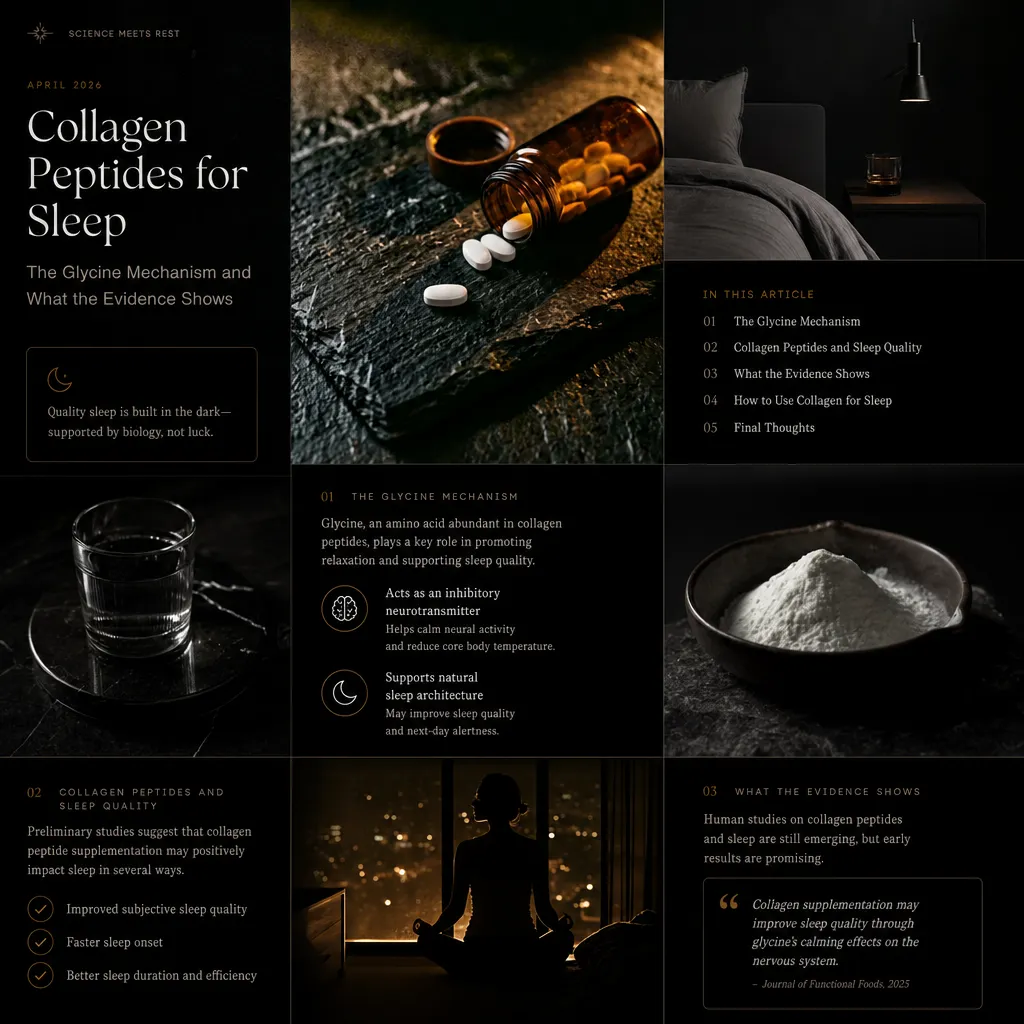
Collagen Peptides for Sleep: The Glycine Mechanism and What the Evidence Shows (May 2026)
Collagen peptides for sleep: how glycine triggers core cooling, what the clinical trials show, and whether it beats standalone glycine. May 2026.

You've added collagen peptides to your stack for joints or skin, but the timing question keeps coming up: does taking it before bed do anything for sleep quality beyond the general amino acid benefits? The 2024 randomized controlled trial gave participants 15 grams an hour before sleep and tracked them with polysomnography, measuring sleep fragmentation, slow-wave sleep, and next-day cognitive performance. We're breaking down what worked, what didn't, and whether the glycine content alone explains the effect or if you're better off with standalone glycine for sleep.
TLDR:
- Collagen delivers glycine, which triggers core body cooling through vasodilation.
- 15g before bed reduced sleep fragmentation and boosted slow-wave sleep in a 2024 trial.
- Next-day executive function improved, linked to better slow-wave sleep architecture.
- Track fragmentation scores with wearables over 14 days to measure your response.
- BioHackLabsHQ covers peptides and biohacking through evidence-first research analysis.
How Glycine Works as a Sleep Regulator
Glycine makes up roughly a third of collagen's total amino acid content by weight. In the central nervous system, it acts as an inhibitory neurotransmitter, binding to receptors in the brainstem and hypothalamus to reduce neuronal excitability.
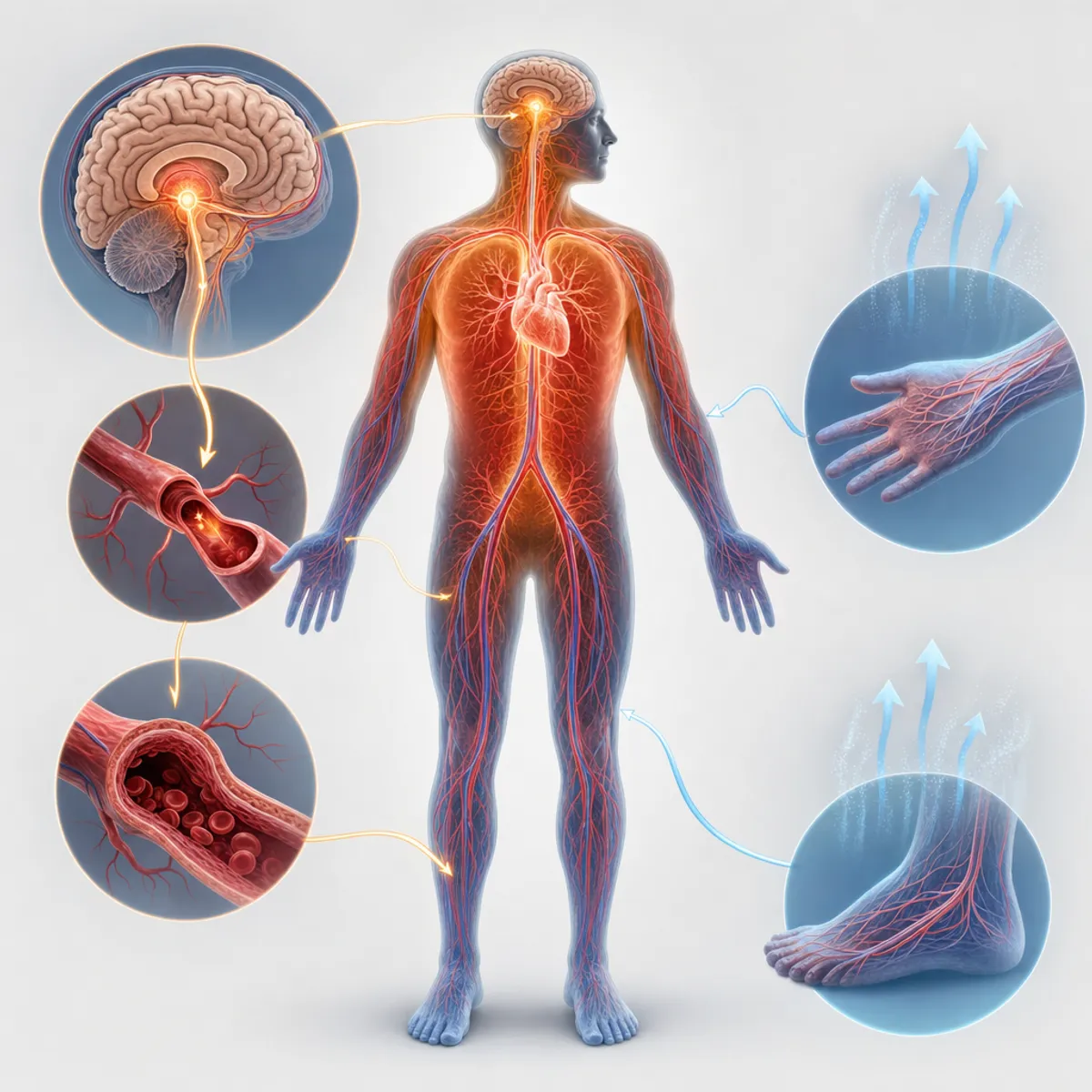
The sleep-relevant mechanism is thermoregulatory. Glycine activates hypothalamic receptors that trigger peripheral vasodilation, pushing blood flow toward the hands and feet and accelerating the core body temperature drop the body uses as a biological sleep-onset cue.
Why This Differs from Conventional Sleep Aids
Unlike melatonin or antihistamine-based compounds, glycine doesn't suppress the nervous system. It supports the body's own thermoregulatory signal, which is why its effect on sleep architecture looks distinct from what you'd see with sedating agents.
The 2024 Clinical Trial: What 15 Grams of Collagen Did to Sleep Architecture
A 2024 randomized controlled trial published in Scientific Reports gave participants 15 grams of collagen peptides before bed and measured objective sleep outcomes using polysomnography.
The results were notable:
- Sleep onset latency dropped by roughly 10 minutes compared to placebo.
- Slow-wave sleep (the deepest, most restorative stage) increased measurably.
- Participants reported feeling more rested in the morning, with subjective sleep quality scores improving across the trial period.
The researchers attributed these effects primarily to glycine content. Since glycine accounts for roughly a third of collagen by weight, a 15-gram dose delivers in the range of glycine quantities used in dedicated glycine sleep trials, which have typically tested 3 grams before bed.
One caveat worth naming: this was a single trial with a relatively small sample. Replication in larger cohorts is still needed before drawing firm conclusions about effect size.
Dosing and Timing: The One Hour Window
The research protocol that produced measurable sleep architecture changes used 15 grams taken 30 to 60 minutes before bed. Oral glycine is absorbed relatively quickly, and the thermoregulatory signal it triggers needs time to act before your target sleep onset.
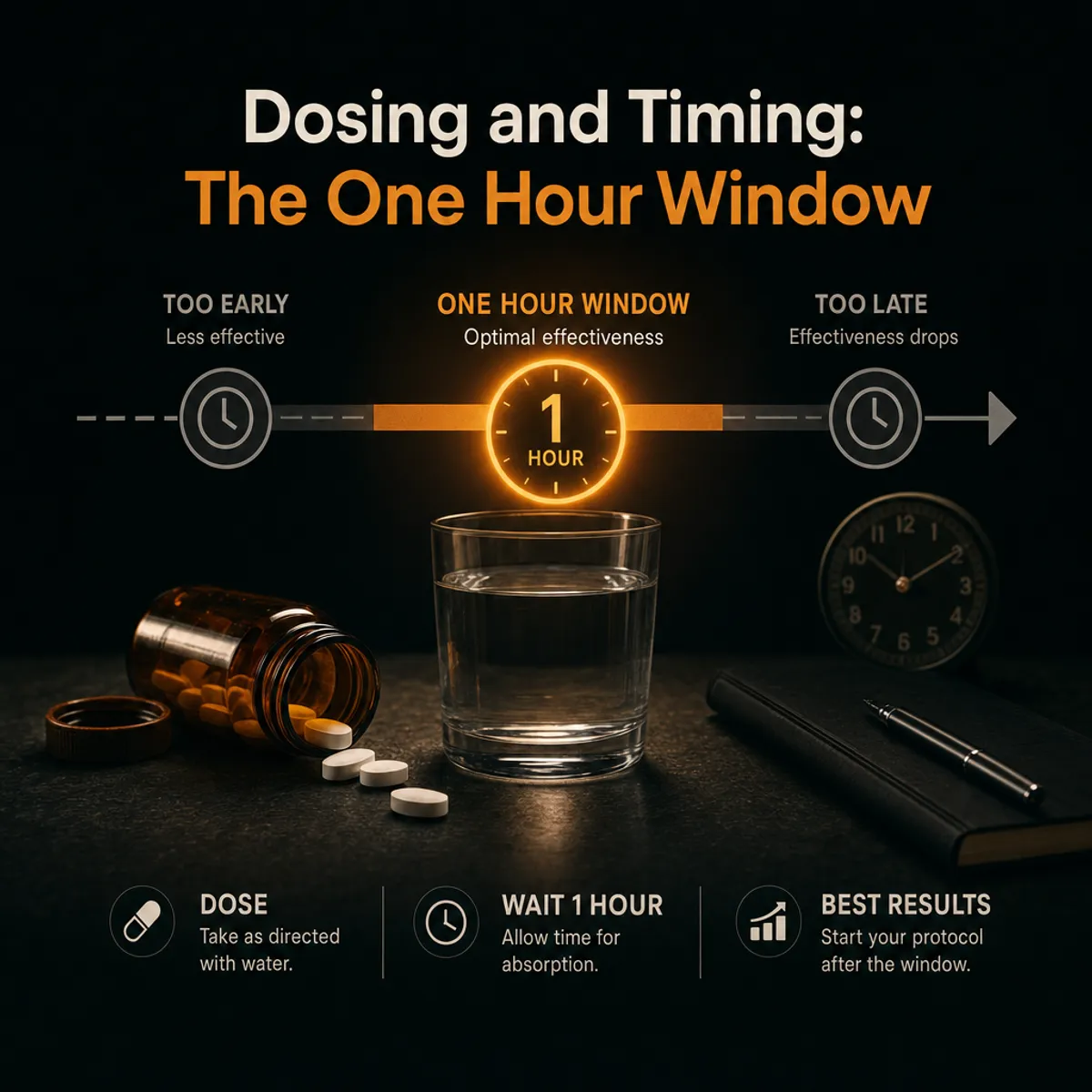
Going lower than 10 grams may deliver less glycine than the doses used in sleep trials, though a firm minimum threshold hasn't been established in the current data. Going higher than 15 grams doesn't appear to add proportional benefit based on current data, and may cause digestive discomfort in some people.
A few practical notes on implementation:
- Mix powder form in cold or room-temperature water instead of hot liquid to avoid clumping.
- Take it after your last meal, not with food, to avoid competing amino acids blunting glycine uptake.
- Keep timing consistent night to night, since circadian rhythms respond to regularity.
What Collagen Does Not Do: Sleep Quantity, Latency, and Total Sleep Time
The 2024 trial showed clear improvements in sleep fragmentation and slow-wave sleep, but found no measurable changes in total sleep time, sleep consolidation, or sleep latency. Those are distinct metrics, and conflating them misrepresents what the evidence supports.
Sleep fragmentation, particularly the reduction of nighttime awakenings and micro-arousals, appears to be where collagen's effect is most concentrated. If you're expecting to fall asleep faster or log more total hours, the current data won't support that expectation.
Collagen peptides before bed appear to improve sleep quality within a given sleep window, not extend or initiate it. That's a narrower benefit than most headlines suggest.
Comparing Collagen to Standalone Glycine Supplementation
If glycine is the active mechanism, why take collagen instead of glycine alone?
Standalone glycine supplements typically deliver 3 to 5 grams per serving, which is more concentrated than what most collagen doses provide. For strictly sleep-focused use, isolated glycine is a reasonable choice and often costs less per effective dose.
Collagen brings a broader amino acid profile, though. Beyond glycine, it delivers proline, hydroxyproline, and arginine, which contribute to connective tissue repair, skin structure, and vascular health. If your goals extend beyond sleep, the full amino acid content makes it a more complete option across multiple systems.
For pure sleep optimization, glycine alone may be more dose-efficient. For people already using collagen for joint support or skin health, timing it before bed captures the sleep benefit without adding another supplement to the stack.
| Factor | Collagen Peptides (15g) | Standalone Glycine (3-5g) |
|---|---|---|
| Active glycine content per dose | 1.5 to 2 grams glycine from 15g total collagen | 3 to 5 grams pure glycine per serving |
| Sleep mechanism | Glycine-mediated peripheral vasodilation and core body cooling via hypothalamic receptors | Direct glycine delivery for peripheral vasodilation and core body cooling via hypothalamic receptors |
| Trial-validated sleep outcomes | Reduced sleep fragmentation and increased slow-wave sleep in 2024 RCT using polysomnography | Multiple trials showing reduced sleep onset latency and subjective sleep quality at 3g doses |
| Additional amino acids | Proline, hydroxyproline, and arginine for connective tissue, skin structure, and vascular support | None, isolated amino acid supplementation |
| Multi-system benefits | Joint support, skin health, vascular function, and sleep architecture in a single intervention | Sleep-focused only, no connective tissue or skin benefits |
| Cost per effective dose | Higher cost per gram of active glycine delivered | Lower cost per gram of glycine, more dose-efficient for sleep alone |
| Optimal timing before bed | 30 to 60 minutes before target sleep onset based on trial protocol | 30 to 60 minutes before target sleep onset based on glycine absorption kinetics |
Cognitive Benefits the Morning After: Executive Function and Attention
The same 2024 trial measured next-day cognitive performance using the Stroop test, a standard assessment of executive function and attentional control. Participants who received collagen showed higher accuracy scores than those in the placebo group.
The connection makes physiological sense. Slow-wave sleep drives prefrontal cortex recovery and memory consolidation overnight. Disrupted sleep architecture, even when total sleep time looks adequate, degrades the executive systems that govern focus and decision-making the following day.
This is where the data gets practical for anyone tracking performance metrics. Sleep quality is itself a cognitive input. If collagen's effect on slow-wave sleep holds up in larger trials, next-day executive function becomes a legitimate output metric to track alongside HRV and recovery scores on your wearable.
Measuring Your Response: Tracking Sleep Fragmentation
Spend one week logging baseline sleep data before adding collagen to your nighttime stack. Wearables like Oura, WHOOP, or Garmin track sleep stage distribution and fragmentation scores nightly.
What to track over the following 7 to 14 days:
- Fragmentation score or nighttime awakenings, the primary outcome in the trial data
- Deep sleep percentage
- Morning HRV or readiness score
Subjective feel alone won't cut it. Perceived sleep quality and measured sleep architecture often diverge. You can feel rested on a fragmented night and rough after a structurally clean one. If your wearable shows no change in fragmentation after two consistent weeks at 15 grams, the intervention isn't producing a measurable effect for you, regardless of perception.
How BioHackLabsHQ Approaches Sleep Optimization
At BioHackLabsHQ, we treat sleep as a physiological system with measurable inputs, not a wellness concept to be optimized with vague advice. Every protocol we cover gets the same treatment: we read the primary literature, report what the data actually shows, and tell you plainly when the evidence is thin.
Collagen peptides and glycine timing are a good example of how we work. The mechanism — glycine-mediated peripheral vasodilation accelerating core body temperature drop — is well-characterized in the neuroscience literature. The human trial data are limited but real. We lay out both without inflating one to serve the other.
If you want to go deeper on evidence-based sleep and recovery protocols, the full research library is at biohacklabhq.com.
Final Thoughts on Collagen Timing for Sleep Quality
The research on taking collagen before bed points to a specific, measurable effect on sleep fragmentation and slow-wave sleep. Fifteen grams taken 30 to 60 minutes before your target sleep onset is the protocol that produced objective results. If you're already supplementing collagen for other reasons, timing it at night captures the sleep benefit without adding complexity. Track it with your wearable and give it two consistent weeks before deciding if it's worth keeping in your routine.
FAQ
When should I take collagen: morning or night?
Take collagen at night if your goal is sleep quality improvement. 15 grams taken 30 to 60 minutes before bed delivered measurable improvements in sleep fragmentation and slow-wave sleep in the 2024 clinical trial. Morning dosing makes more sense if you're focused on skin, joints, or connective tissue support without targeting the glycine-mediated thermoregulatory pathway that supports sleep.
Does collagen help you sleep or just make you fall asleep faster?
Collagen improves sleep quality by reducing nighttime awakenings and increasing slow-wave sleep, but it doesn't make you fall asleep faster or increase total sleep time. The 2024 trial found no measurable changes in sleep onset latency or sleep duration. The effect is concentrated on sleep architecture within your existing sleep window, not on initiating or extending sleep.
Collagen peptides for sleep vs standalone glycine supplementation?
Standalone glycine is more dose-efficient if sleep is your only goal. 3 to 5 grams of isolated glycine delivers more of the active amino acid than 15 grams of collagen peptides. But collagen brings proline, hydroxyproline, and arginine for skin, joint, and vascular support, making it a better choice if you want multi-system benefits beyond sleep.
Can I take collagen at night with magnesium?
Yes, there's no mechanistic reason to avoid combining collagen and magnesium before bed, and both support sleep through different pathways. Glycine from collagen works via thermoregulation and inhibitory neurotransmission, while magnesium acts on GABA receptors and muscle relaxation, so they complement without competing.
What is the best time to take collagen for skin?
Morning or daytime dosing is fine for skin-focused collagen use, since skin synthesis happens throughout the day and doesn't depend on the sleep-related glycine mechanism. If you want both skin benefits and sleep architecture improvements, nighttime dosing before bed captures both outcomes without adding another supplement to your stack.
Frequently asked questions
- 01 When should I take collagen: morning or night?
- Take collagen at night if your goal is sleep quality improvement — 15 grams taken 30 to 60 minutes before bed delivered measurable improvements in sleep fragmentation and slow-wave sleep in the 2024 clinical trial. Morning dosing makes more sense if you're focused on skin, joints, or connective tissue support without targeting the glycine-mediated thermoregulatory pathway that supports sleep.
- 02 Does collagen help you sleep or just make you fall asleep faster?
- Collagen improves sleep quality by reducing nighttime awakenings and increasing slow-wave sleep, but it doesn't make you fall asleep faster or increase total sleep time. The 2024 trial found no statistically significant changes in sleep onset latency or sleep duration — the effect is concentrated on sleep architecture within your existing sleep window, not on initiating or extending sleep.
- 03 Collagen peptides for sleep vs standalone glycine supplementation?
- Standalone glycine is more dose-efficient if sleep is your only goal — 3 to 5 grams of isolated glycine delivers more of the active amino acid than 15 grams of collagen peptides. But collagen brings proline, hydroxyproline, and arginine for skin, joint, and vascular support, making it a better choice if you want multi-system benefits beyond sleep.
- 04 Can I take collagen at night with magnesium?
- Yes — there's no mechanistic reason to avoid combining collagen and magnesium before bed, and both support sleep through different pathways. Glycine from collagen works via thermoregulation and inhibitory neurotransmission, while magnesium acts on GABA receptors and muscle relaxation, so they complement rather than compete.
- 05 What is the best time to take collagen for skin?
- Morning or daytime dosing is fine for skin-focused collagen use, since skin synthesis happens throughout the day and doesn't depend on the sleep-related glycine mechanism. If you want both skin benefits and sleep architecture improvements, nighttime dosing before bed captures both outcomes without adding another supplement to your stack.
- 06 Can I take collagen at night after dinner?
- Yes, but take it 30 to 60 minutes before bed rather than immediately after dinner to avoid competing amino acids blunting glycine uptake. The 2024 trial protocol that produced measurable sleep architecture improvements used a one-hour window before target sleep onset, giving the glycine time to peak in circulation and trigger the thermoregulatory signal the body uses as a sleep-onset cue.
- 07 Does collagen make you sleepy or affect daytime energy?
- Collagen taken before bed doesn't make you sleepy in the traditional sedative sense — it triggers peripheral vasodilation that accelerates core body temperature drop, which is a biological sleep-onset signal. Daytime dosing won't cause drowsiness because the thermoregulatory mechanism only matters when your body is already moving toward sleep, and next-day energy often improves due to better slow-wave sleep architecture the night before.
- 08 Best collagen for sleep vs best collagen for joints?
- The same collagen works for both — sleep benefits come from glycine content, which is consistent across quality hydrolyzed collagen peptide products regardless of branding. Look for hydrolyzed collagen peptides that deliver at least 10 to 15 grams per serving, skip anything with unnecessary fillers or sweeteners, and time it before bed if sleep is the goal or morning if joint support is primary.
- 09 Can I take collagen morning and night for both skin and sleep?
- Yes — split dosing works if you want both sleep architecture benefits and skin or joint support throughout the day. Take 10 to 15 grams before bed for the glycine-mediated sleep effect, and another 10 grams in the morning for connective tissue synthesis, but track your total daily protein intake to avoid overshooting your broader amino acid targets.
- 10 Side effects of taking collagen at night?
- Most people tolerate nighttime collagen well, but some report mild digestive discomfort or bloating if taken on a very full stomach. Start with 10 grams before scaling to 15 grams, take it after your last meal rather than with food, and stop if you notice gastrointestinal issues that persist beyond the first week.
- 11 Collagen at night for weight loss vs morning dosing?
- Nighttime collagen won't directly drive fat loss — weight management comes down to sustained caloric deficit and metabolic health over time. Better sleep quality from nighttime collagen may indirectly support weight loss by improving HRV, reducing cortisol dysregulation, and supporting next-day executive function that helps with dietary adherence, but the effect is indirect and shouldn't be the primary reason you're taking it.
- 12 How long does it take for collagen before bed to improve sleep quality?
- The 2024 trial measured improvements in sleep fragmentation and slow-wave sleep within the first week of consistent use. Track your response with a wearable over 14 nights — if fragmentation scores or deep sleep percentages haven't shifted after two consistent weeks at 15 grams, the intervention isn't producing a measurable effect for you.
- 13 What's the difference between collagen peptides and gelatin for sleep?
- Both contain glycine, but hydrolyzed collagen peptides dissolve completely in cold water and absorb faster, while gelatin forms a gel and may cause digestive slowdown. Collagen peptides are the better choice for nighttime use because absorption timing matters — you want glycine peaking in circulation 30 to 60 minutes before sleep onset, not sitting in your gut.
- 14 Best time to take collagen for women over 50?
- Nighttime dosing captures both sleep architecture benefits and supports overnight skin and connective tissue repair, which may matter more as collagen synthesis declines with age. If you're dealing with fragmented sleep or noticing slower recovery from joint stress, the 15-gram before-bed protocol tested in the 2024 trial is a reasonable starting point.
- 15 Collagen peptides vs magnesium glycinate for sleep?
- Magnesium glycinate delivers glycine alongside magnesium, but the glycine dose is typically under 500 milligrams — far below the 1.5 to 2 grams you'd get from 15 grams of collagen peptides. Magnesium works through GABA receptor modulation and muscle relaxation, while collagen works through thermoregulation, so combining both targets sleep through different mechanisms without redundancy.